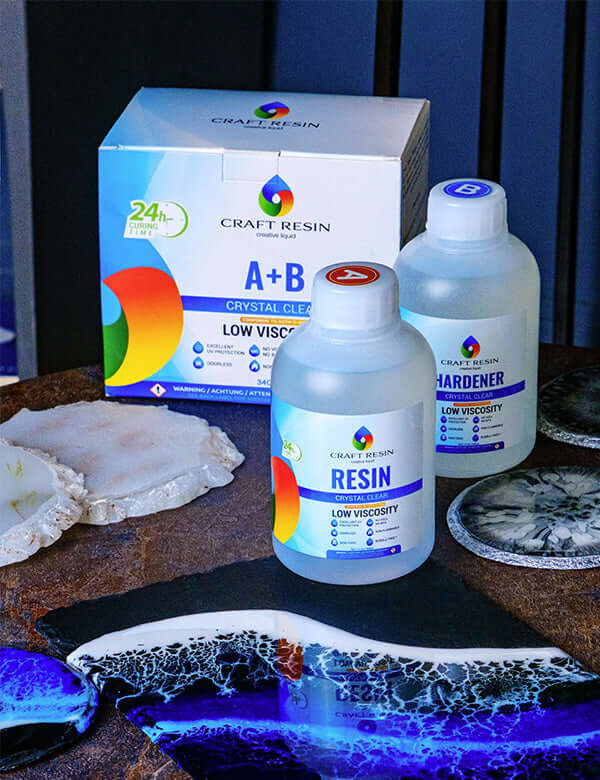
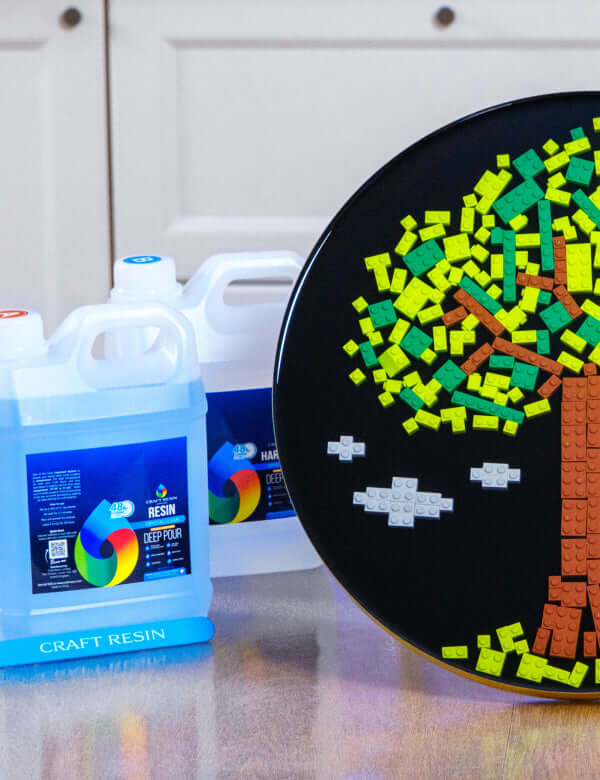
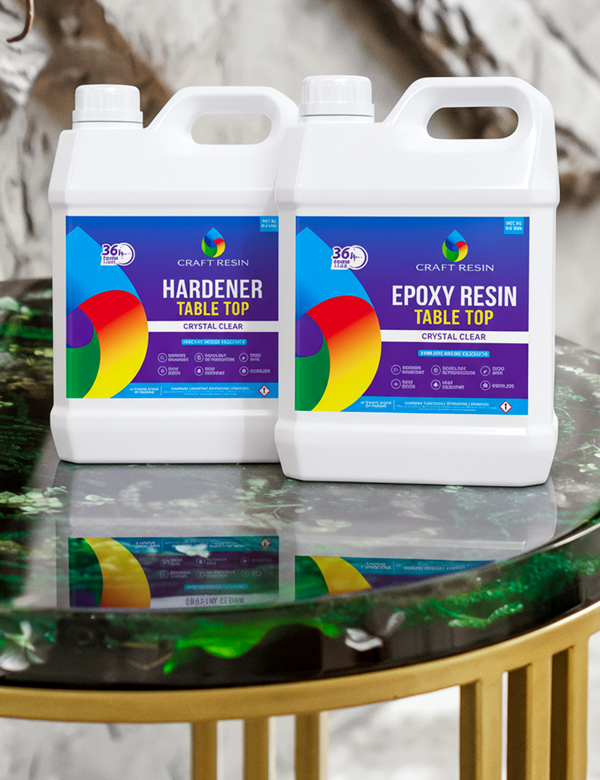

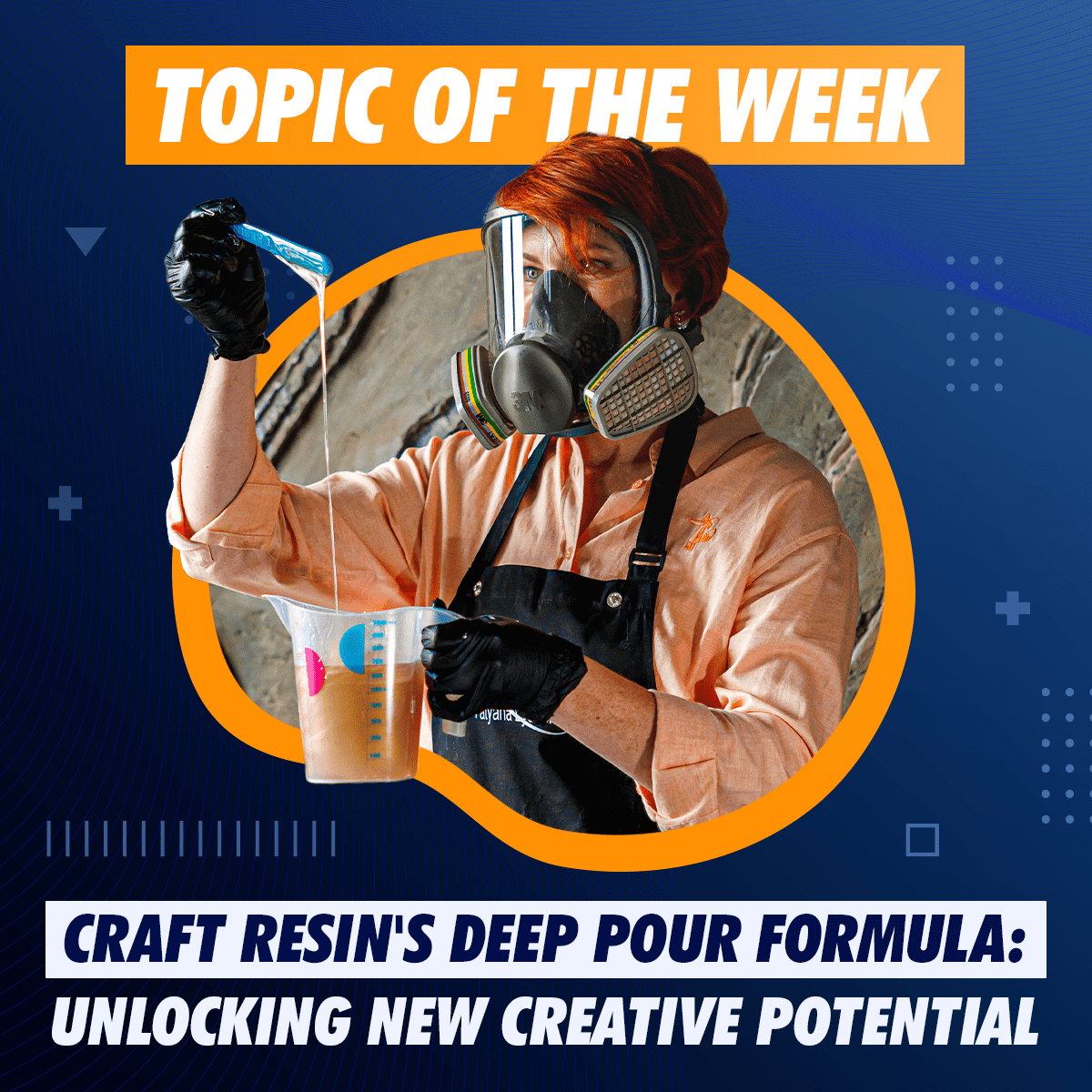
- Type: Deep pour epoxy resin (a clear casting epoxy) — a two-part epoxy polymer system built for deep molds and large-volume castings
- Big pours: Suitable for 20+ liter projects when poured in 2 in / 5 cm layers to help control the exothermic reaction
- Mix ratio: 2:1 by volume only (not by weight)
- Viscosity: Mixed viscosity is 500 ± 50 cP at 77°F / 25°C — designed for smooth flow and easier bubble release
- Working time: approximately 1 hour pot life at 77°F / 25°C
- Cure time: Cure 48–72 hours; do not demould before 48 hours (warmer, stable conditions can shorten cure time)
- Compliance & safety positioning: Conforms to ASTM D-4236 (a labelling standard for art materials, not a safety approval); positioned as BPA-free. See the Safety Data Sheet (SDS) for full handling and ventilation guidance.
Deep pour resin epoxy is used when a project needs depth, clarity, and predictable curing across larger volumes — river tables, deep molds, large castings, flower preservation, and encapsulation. Compared with standard coating epoxies, deep pour systems are designed to slow the chemical reaction between resin and hardener, increasing working time and making heat control more manageable in thick pours.

The updated Craft Resin Deep Pour formula focuses on measurable control points — viscosity, working time, and cure timing — so large pours feel repeatable instead of risky.
What’s new in the updated Deep Pour formula
Updated formulas are only worth talking about if they translate into practical wins at the workbench. Here’s what’s meaningfully improved — and why it matters for real-world casting:
- Lower mixed viscosity (500 ± 50 cP) supports flow into corners and helps bubbles rise and release more easily during deep casting
- Long working time (approximately 1 hour) means less rushing, especially when you’re staging large pours, placing inclusions, or pouring multiple sections
- Clear cure timeline (cure 48–72h, demould from 48h) simplifies demold and layer scheduling
- Formulated for higher yellowing resistance than standard coating grades (manufacturer statement, no test method given) supports long-term clarity expectations for typical indoor projects
- Compliance & safety positioning: Conforms to ASTM D-4236 (a labelling standard for art materials, not a safety approval); BPA-free — see the Safety Data Sheet (SDS) for handling and ventilation guidance

Deep Pour vs Table Top Epoxy — Choosing the Right Resin Type
Table comparing standard epoxy vs deep pour resin vs updated Craft Resin Deep Pour Note: “Standard epoxy” and “generic deep pour resin” reflect common category behavior; exact values vary by product and conditions.
| Property | Standard Epoxy (Coating / Tabletop) | Deep Pour Resin (Generic Casting) | Updated Craft Resin Deep Pour |
|---|---|---|---|
| Pour depth per layer | Thin coats | Thick layers | 2 in / 5 cm per layer (especially for 20+ L projects) |
| Working time | Short to medium | Longer | Approx. 1 hour |
| Cure time (handling) | Faster | Slower | Cure 48–72h; demould from 48h |
| Heat production (exotherm) | Higher risk in thick masses | Designed to reduce peak heat | Layering helps control the exothermic reaction in large pours |
| Best applications | Glossy finishes on top of substrates | River tables, deep molds, large castings | River tables, deep molds, large castings, flower preservation, encapsulation |
Technical Specifications

| Property | Spec | What it means for you |
|---|---|---|
| Mix ratio | 2:1 by volume only | Measure by volume, not weight. Accuracy here controls everything downstream. |
| Viscosity @ 77°F / 25°C | Resin 1,000 ± 100 cP Hardener 220 ± 50 cP Mixed 500 ± 50 cP |
Low mixed viscosity supports smooth flow and effective bubble release in deep castings. |
| Working time (pot life) | Approximately 1 hour | More time to mix carefully, pour slowly, and stage larger projects. |
| Cure time |
Cure 48–72h Demould from 48h |
Predictable timeline for demolding and handling (depends on temperature and mass). |
| Ideal temperature range | 70–81°F / 21–27°C | Stable warmth improves clarity and ensures consistent curing. |
| Yellowing resistance | Higher than standard coating grades | Manufacturer statement, no test method given. Not immune to yellowing over time. |
| Safety profile | BPA-free — see the Safety Data Sheet (SDS) for handling and ventilation guidance | Designed for a more comfortable workspace when used as directed. |
| Heat resistance | Up to 176°F / 80°C | Avoid direct high-heat contact, but the cured material withstands moderate temperatures. |
Why mixing accuracy matters: epoxy turns into a solid polymer through a chemical reaction. Off-ratio or under-mixing can leave unreacted material, often showing up as tackiness, soft spots, or incomplete cure.

Built for big pours (20+ liters) — why layers matter
Large pours are where epoxy stops being “just mix and pour” and becomes heat management. As the chemical reaction progresses, it becomes an exothermic reaction — it releases heat. In large masses, heat can build faster than it can escape, increasing the risk of clouding, cracking, distortion, or trapped bubbles.
A reliable approach for big projects is staged pouring:
- Pour up to 2 in / 5 cm per layer
- Let each layer stabilize before the next pour (timing depends on temperature and mass)
- Keep the room stable to avoid cure surprises

Temperature Control — Getting Consistent Results (18°C+ Recommended)
Temperature is the quiet factor that decides whether your project feels easy or chaotic. Temperature influences viscosity, bubble release, working time, and cure speed.
What we recommend
- 18°C+ (minimum recommended working temperature) for reliable handling
- For best clarity and the most predictable cure behavior, stable warmer conditions help — especially the 22–25°C range for batches of 1–5 kg (cooler for larger pours)
If you’re working near 18°C, you can still get great results — but your timeline may slow down and bubbles may release more slowly. The key is consistency: avoid temperature fluctuations during the early cure window.

Practical temperature tips
- Warm the room before you mix, not after you pour
- Keep resin and hardener at room temperature (cold bottles = thicker flow + more bubbles)
- Avoid pouring near open windows, heaters cycling on/off, or cold floors
- If you need warmth, aim for steady ambient warmth — not hot air blasting the surface
How to choose the best epoxy resin for a river table (without naming brands)

Searchers asking “best epoxy resin for river table” usually need a decision checklist:
- Depth plan: choose a deep pour casting epoxy when the channel is deep, then plan staged layers (for example, 2 in / 5 cm per layer)
- Viscosity and bubbles: lower viscosity helps resin flow and helps bubbles release
- Working time: longer pot life reduces rushed pours and trapped air
- Cure predictability: clear cure timing helps schedule layers, sanding, and finishing
- Clarity expectations: yellowing resistance helps, but realistic UV expectations and good care still matter
This framework keeps selection practical — and it fits both first-time river table builds and production workflows.
For projects up to 2 inches deep, we recommend using our Deep Pour Craft Resin
Projects this formula is made for
- River tables & live edge builds: deep channels, staged pours, clarity-first results.
- Deep molds & large castings: thick blocks, deep forms, detailed corners.
- Flower preservation: staged pours to manage float, bubbles, and clarity — a strong match for epoxy for flower preservation intent.
- Encapsulation / object casting: sealing porous objects plus “lock-in” layers to reduce trapped air.


Practical Process Overview (High-Leverage Steps Only)
This is not a full tutorial — it’s the set of steps that prevents the majority of failures.
-
Measure accurately (2:1 by volume)
Use calibrated mixing cups. No guessing, no “close enough.” -
Mix thoroughly
Scrape sides and bottom. Mix slowly to reduce whipping in air. If possible, transfer to a clean cup and mix again. -
Let the mix rest briefly
A short rest helps bubbles rise before you pour. -
Pour in layers (2 in / 5 cm per layer)
Especially for large-volume projects and deep channels. -
Control temperature and avoid fluctuations
Stable conditions beat “warm for an hour then cold overnight.”
Three “don’ts” that save projects:
- Don’t mix by weight
- Don’t rush layers
- Don’t pour in a room with temperature swings

Practical Essentials for Pro Result
Working with Color: Pigments, Tints, and Transparency
Color can be added using epoxy-compatible pigments such as transparent resin dyes (for a tinted, glass-like look) or mica/pigment pastes (for opaque or metallic effects). Pigments are best pre-mixed into the resin part first, then the hardener is added — the 2:1 by volume ratio must remain unchanged. Heavier pigment loads and some additives can slow cure, reduce transparency, and increase the chance of tacky areas — so it’s best to start small, test a mini batch, and expect longer cure times when the mix becomes more heavily colored or opaque. For the clearest results, use transparent dyes sparingly and avoid moisture-sensitive or water-based colorants.
Troubleshooting & Quick Fixes
- Still tacky after 48h: most often off-ratio, under-mixing, or low temperature. Fix: measure by volume, mix longer, stabilize temperature.
- Bubbles: cold materials (higher viscosity), fast pouring, porous substrates releasing air. Fix: warm to room temp, pour slowly, seal porous surfaces.
- Cloudiness: moisture contamination, overheating, unstable conditions. Fix: keep materials dry, stage pours, keep room stable.
- Overheating / cracks: too much mass at once. Fix: staged layers (2 in / 5 cm), avoid heat traps, keep the pour environment stable.
- After adding color: too much pigment or incompatible colorants can slow cure and reduce clarity — test small batches first.
Safety Standards & Certification
Uncured epoxy is still reactive — standard protective habits remain best practice.

Recommended PPE (personal protective equipment): nitrile gloves, safety glasses, and long sleeves to prevent skin and eye contact during mixing and pouring. In enclosed spaces — or when sanding cured epoxy — a proper respirator is recommended: use an organic vapor/particulate setup around uncured materials, and a P100 particulate filter for sanding dust.
Practical boundaries:
- Avoid cutting directly on epoxy surfaces.
- Avoid prolonged direct high-heat contact (hot pans, boiling liquids).