
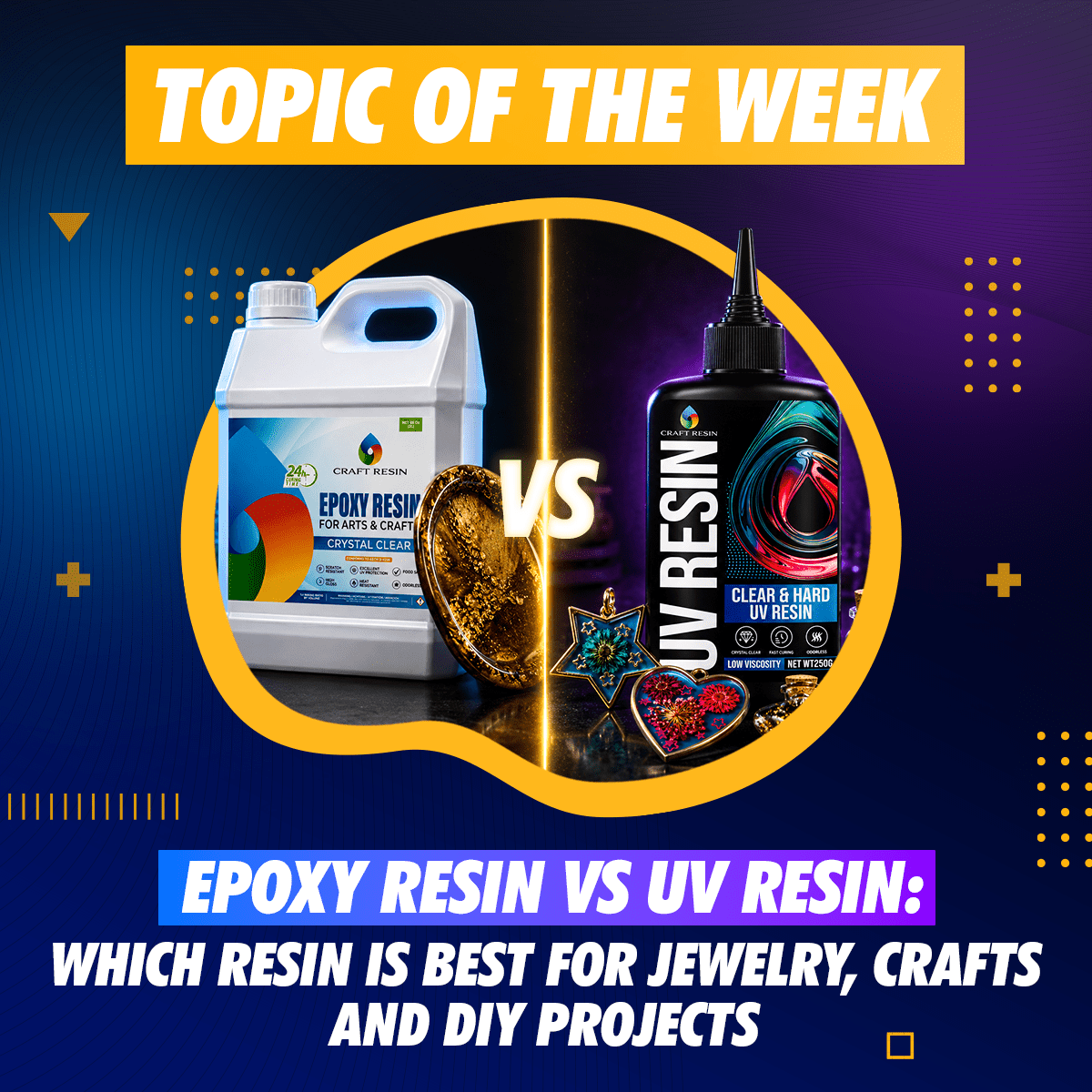
- What UV resin and epoxy resin are and how each one works
- A full side-by-side comparison of both types
- Which resin is better for jewelry, crafts, and specific DIY projects
- When to choose UV resin and when to choose epoxy resin
- How to pick the right UV resin size and kit for beginners
Quick Answer: UV resin cures in 1 to 3 minutes under a UV lamp, requires no mixing, and works best for small precise projects like jewelry and bezels. Epoxy resin requires mixing two components, takes 24 to 72 hours to cure, and is better for larger projects, molds, surfaces, and deep castings. The right choice depends on the project size, the level of detail required, and the available working time.

What Is UV Resin?
UV resin is a single-component resin that cures when exposed to ultraviolet light. There is no mixing, no measuring, and no waiting hours for results. Apply the resin, expose it to a UV lamp at 365 to 405nm, and the piece is solid within 1 to 3 minutes.
The main advantage of UV resin is control. The resin stays liquid until UV light is applied, which means the working time is essentially unlimited. A maker can position inclusions, adjust the piece, and take time getting everything right before committing to the cure.

UV Resin Pros and Cons
Pros:
- No mixing or measuring required - apply directly from the bottle
- Unlimited working time until UV light triggers the cure
- Cures in 1 to 3 minutes, allowing multiple layers in a single session
- Precise control over inclusion placement before curing
- Low odor, safe for extended indoor use
- Crystal clear, hard, high-gloss finish
Cons:
- Requires a UV lamp at 365 to 405nm - additional equipment cost
- Limited to 1 to 3mm per layer - not suitable for deep projects
- Cannot be used for surface coatings, large molds, or river tables
- Lower heat resistance than fully cured epoxy resin (up to 60°C)
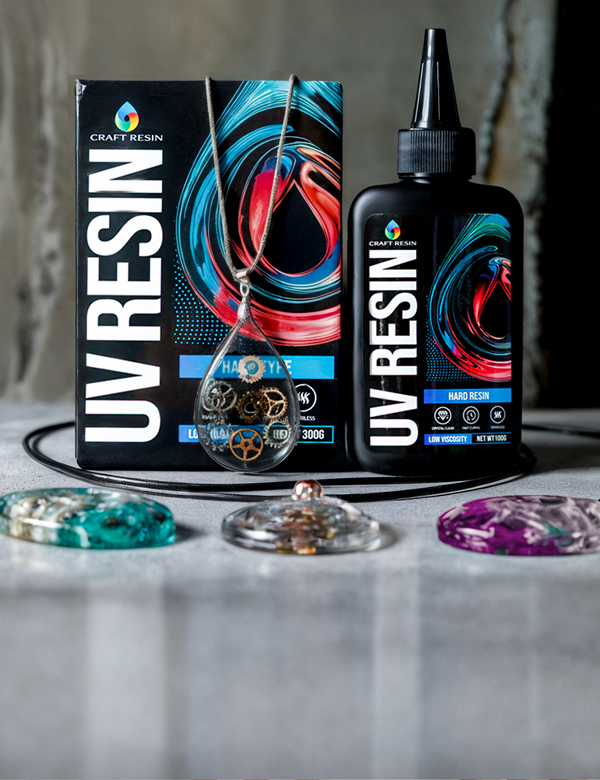
Craft Resin UV Resin is a hard-type formula with low viscosity at 2000 CPS. The finished result is crystal clear with a glass-like finish. Maximum layer depth is 1 to 3mm, which makes UV resin suited to shallow projects where fine detail and fast results matter more than volume.
Craft Resin UV Resin key specifications
| Specification | Value |
|---|---|
| Components | Single component, no mixing |
| Viscosity | 2000 CPS |
| UV wavelength | 365 to 405nm |
| Cure time | 1 to 3 minutes under UV lamp |
| Maximum layer depth | 1 to 3mm |
| Hardness after cure | 85D |
| Finish | Crystal clear, hard, glossy |
| Odor | Low odor, safe for indoor use |
What Is Epoxy Resin?
Epoxy resin is a two-part system: Part A (resin) and Part B (hardener). The two components are combined in a specific ratio, mixed thoroughly, and the polymerization reaction begins. The result is a durable, crystal-clear, hard material that can be poured into molds, applied to flat surfaces, or used for deep castings.
Craft Resin makes three epoxy resin formulas, each engineered for a different category of project.
Craft Resin Arts and Crafts mixes at 1:1 by volume, has a mixed viscosity of 1400 CPS, and a working time of 35 to 40 minutes. Maximum layer depth is 6mm. Hard cure at 24 hours, full cure at 72 hours. Best for creative projects: jewelry with larger components, coasters, trays, molds, and resin art.
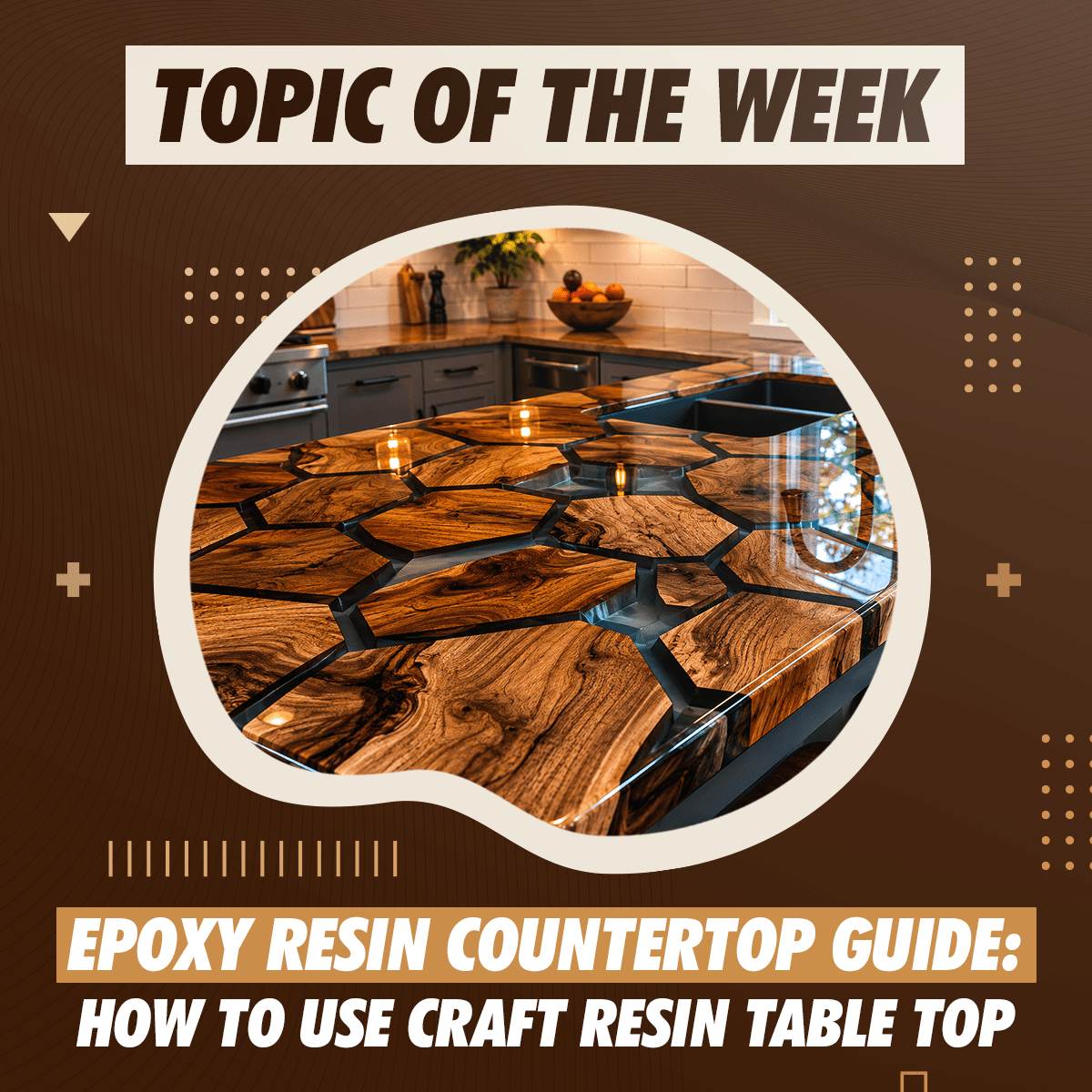
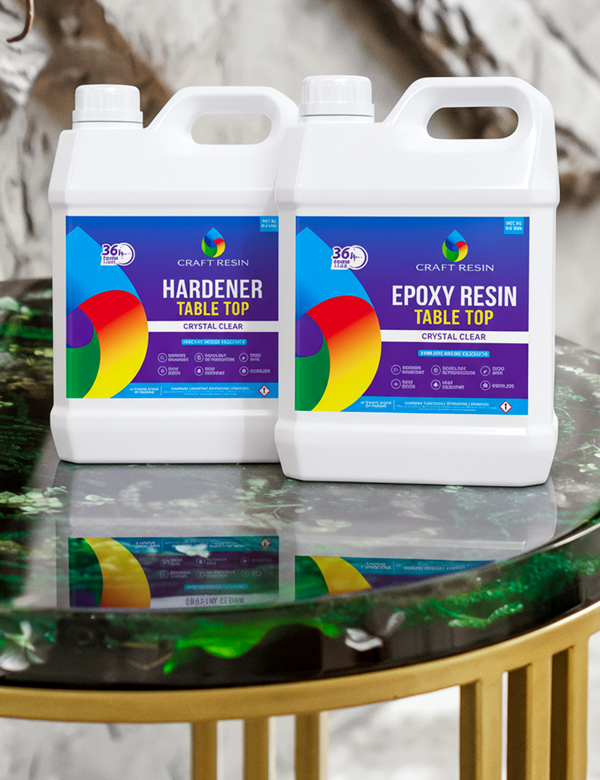
Craft Resin Table Top mixes at 1:1 by volume and has a viscosity of 3800 CPS. Maximum coat depth is 3mm. Best for coating flat surfaces such as countertops, bar tops, and furniture.
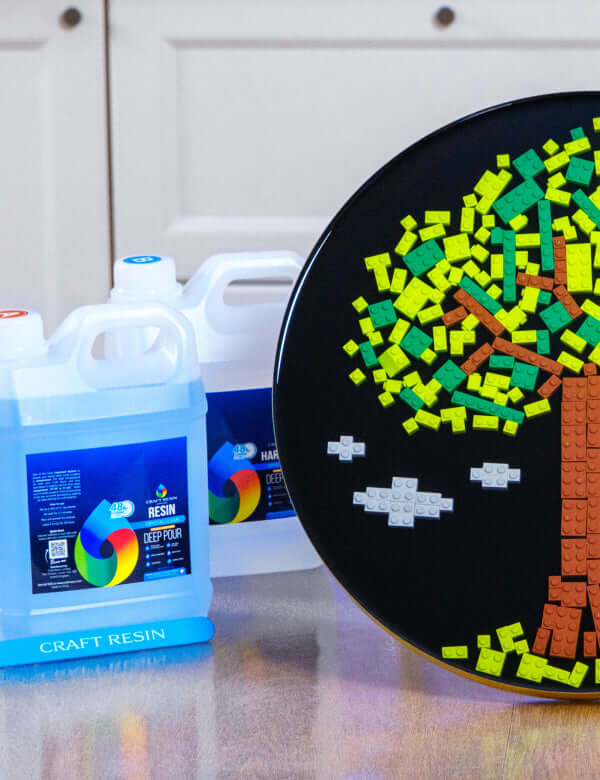
Craft Resin Deep Pour mixes at 2:1 by volume, has a viscosity of 600 CPS, and a working time of 90 to 100 minutes. Maximum layer depth is up to 2 inches (5cm) in wide open molds. Best for river tables, large castings, and deep encapsulations.

All Craft Resin epoxy formulas require a room temperature of 21 to 27°C throughout the entire curing cycle, not just during the pour.
Pros:
- No special equipment required beyond mixing tools and a warm room
- Suitable for large projects, molds, flat surface coatings, and deep castings
- Multiple formulas available for different applications (Arts and Crafts, Table Top, Deep Pour)
- Higher structural strength than UV resin after full mechanical cure
- More cost-effective per gram for larger project volumes
Epoxy Resin Pros and Cons
Cons:
- Requires precise measuring and thorough mixing of two components
- Working time is limited: 35 to 40 minutes for Arts and Crafts
- Takes 24 to 72 hours to cure and 21 days to reach full mechanical strength
- Room temperature must stay consistent throughout the entire curing cycle
- More steps involved: measuring, mixing, pouring, bubble removal, covering, waiting

UV Resin vs Epoxy Resin: Full Comparison
| Feature | UV Resin | Epoxy Resin (Arts and Crafts) |
|---|---|---|
| Mixing required | No | Yes, 1:1 by volume |
| Cure time | 1 to 3 minutes under UV light | 24 hours hard cure, around 21 days for full mechanical strength |
| Working time | Unlimited (until UV light is applied) | 35 to 40 minutes |
| Maximum layer depth | 1 to 3mm | 6mm (Arts and Crafts) |
| Project size | Small and precise | Small to large |
| Mold casting | Yes, shallow molds only | Yes, up to 6mm per layer |
| Surface coating | Not suitable | Yes (Table Top formula) |
| Deep pours | Not suitable | Yes (Deep Pour formula) |
| UV lamp required | Yes | No |
| Color/pigments | Yes, compatible colorants | Yes, compatible colorants |
| Finish | Crystal clear, high gloss | Crystal clear, high gloss |
| Best for | Jewelry, bezels, small details | Coasters, trays, art, molds, surfaces |
Can UV Resin Replace Epoxy Resin?
UV resin can only replace epoxy resin for small, shallow projects up to 3mm deep. For anything beyond that - surface coatings, deep pours, large molds, or river tables - UV resin is not a substitute.
The core reason is depth and volume. UV resin cures in layers of 1 to 3mm and cannot be applied to flat surfaces without running. Epoxy resin handles depths up to 6mm per layer with Arts and Crafts, up to 2 inches (5cm) per layer with Deep Pour, and self-levels on flat surfaces in coating applications. These are fundamentally different use cases, not different points on the same scale.
If the project is a bezel, a charm, or a shallow decorative piece, UV resin is faster and easier. If the project is a coaster, a mold, a countertop, or a river table, epoxy resin is the correct material. Trying to use UV resin for the second category produces incomplete coverage, uncured sections, and results that cannot be fixed after the fact.
Best Resin for Jewelry Making
Both UV resin and epoxy resin work for jewelry, but the right choice depends on the type of jewelry being made.

UV resin is the better choice for: Bezels, cabochons, charms, earrings, and any piece where precise control over placement is important. Because UV resin stays liquid until light is applied, inclusions can be positioned exactly before the cure is triggered. The fast cure also means multiple layers can be built up in a single session without waiting between each one.
Epoxy resin is the better choice for: Larger jewelry pieces, resin pendants with significant volume, or pieces that require a 6mm pour depth. Craft Resin Arts and Crafts gives 35 to 40 minutes of working time, which is plenty for preparing a batch that covers multiple pieces in one pour. The slightly longer cure time is the trade-off for a larger working volume and greater depth per layer.
For most beginners starting with jewelry, UV resin is the faster and more forgiving entry point. The Craft Resin UV Kit includes the resin and a UV lamp, which is everything needed to get started.
Best Resin for Crafts
The right resin for craft projects depends almost entirely on the size and depth of the project.
For small decorative items, keychains, phone grips, and flat embellishments up to 3mm deep, UV resin handles the job quickly and cleanly. For coasters, trays, decorative molds, fluid art, and projects that require 6mm or more depth, Craft Resin Arts and Crafts is the correct formula.

For surface coating on a piece of resin art or a painted canvas, Craft Resin Table Top gives a self-leveling, scratch-resistant coat that protects the artwork and adds depth. For large castings, blocks, and river tables, Craft Resin Deep Pour provides the volume and extended working time those projects require.
The maker and DIY community at r/resin and r/DIY covers project-specific advice across all these categories, including troubleshooting, technique comparisons, and project logs.
When to Choose UV Resin
UV resin is the right choice in the following situations:
- The project is small and shallow. If the total pour depth is under 3mm and the project area is compact, UV resin is faster, simpler, and produces the same crystal-clear result as epoxy without the mixing step or the waiting time.
- Precise placement of inclusions matters. UV resin does not begin curing until UV light is applied. Flowers, glitter, small objects, and decorative elements can be placed and repositioned as many times as needed before the cure is triggered.
- Fast results are the priority. A UV resin piece is fully cured and ready to handle in minutes rather than hours. For makers working in batches or on tight timelines, that speed is a significant advantage.
- No UV lamp is not an option. UV resin requires a UV lamp at 365 to 405nm. A lamp that does not reach the correct wavelength will not cure the resin fully. The Craft Resin UV Kit includes a lamp calibrated for the formula.

When to Choose Epoxy Resin
Epoxy resin is the right choice when:
- The project requires more than 3mm depth. Any project deeper than the UV resin maximum needs epoxy. Craft Resin Arts and Crafts handles up to 6mm per layer. Craft Resin Deep Pour handles up to 2 inches (5cm) per layer in wide open molds.
- The project involves a large surface or mold. Epoxy resin can be mixed in any volume required and poured across large areas, into large molds, and onto flat surfaces. UV resin is limited to small quantities applied in precise areas.
- A flat protective coating is needed. UV resin is not designed for surface coating. Craft Resin Table Top self-levels on horizontal surfaces and cures to a durable, heat-resistant finish.
- No UV lamp is available. Epoxy resin cures through a chemical reaction between the two components and does not require any equipment beyond mixing tools and a warm room.
How to Choose the Right UV Resin Size
Craft Resin UV Resin is available in four sizes: 300g, 500g, 1000g, and the UV Kit which includes 200g (two 100g bottles) plus a 36W UV lamp.
300g is the right starting point for occasional makers, for testing the formula on a new type of project, or for anyone who works with small quantities per session such as individual earring pairs or a handful of bezels at a time.
500g suits makers who work regularly and want a larger supply on hand without committing to the largest volume. A good option for anyone who has already tried UV resin and knows the formula works for their projects.
1000g is the most cost-effective option for makers producing in batches, running a small business, or working with UV resin as a primary material across multiple projects.
UV Kit (200g + 36W lamp) is designed for beginners who do not yet have a UV lamp. The kit includes two 100g bottles of UV resin and a 36W lamp calibrated to the correct wavelength range, so everything needed to start is included in one purchase.
UV resin has a shelf life after opening. Storing the resin in a sealed, dark container away from UV light and sunlight extends the working life of the product. Exposure to indirect UV light during storage causes partial curing and affects the final result.
Use the Craft Resin coverage calculator on the product website to estimate the volume needed for a specific project before purchasing.

Best UV Resin Kit for Beginners
The Craft Resin UV Kit is the recommended starting point for anyone new to UV resin. The kit includes two 100g bottles of Craft Resin UV Resin (200g total) and a 36W UV lamp with 22 LED beads, calibrated to the correct wavelength range of 365 to 405nm. Having the correct lamp matters because UV resin will not cure fully under a lamp with the wrong wavelength, which is one of the most common reasons beginners end up with sticky, uncured results.
The hard-type formula in the Craft Resin UV Kit cures to 85D hardness with less than 2% shrinkage, producing a firm, scratch-resistant finish that does not remain tacky after curing. Low viscosity at 2000 CPS means the resin flows easily into fine mold detail and releases cleanly.
For makers who already own a suitable UV lamp and want to purchase resin only, Craft Resin UV Resin is available separately in 300g, 500g, and 1000g.
For beginners who want to explore both UV resin and epoxy resin, starting with the UV Kit and a small set of bezels or silicone molds provides a fast, low-pressure introduction to working with resin before moving to larger epoxy projects.
Watch the full Craft Resin UV resin guide on YouTube: How to Use UV Resin: a Complete Guide from Craft Resin
Quick Recap
- UV resin requires no mixing and cures in 1 to 3 minutes under a 365 to 405nm UV lamp
- Epoxy resin requires mixing two components and takes 24 to 72 hours to cure
- UV resin is best for small, precise, shallow projects: jewelry, bezels, charms, small details
- Epoxy resin is best for molds, coasters, trays, surface coatings, and deep castings
- Maximum UV resin depth is 1 to 3mm per layer
- Maximum Craft Resin Arts and Crafts depth is 6mm per layer
- Both produce a crystal-clear, high-gloss finish
- The Craft Resin UV Kit includes the resin and the correct lamp for beginners
- Use the Craft Resin coverage calculator to estimate volume before purchasing

FAQ: UV Resin vs Epoxy Resin
What is the difference between UV resin and epoxy resin?
UV resin is a single-component product that cures under UV light in 1 to 3 minutes. Epoxy resin is a two-component system that requires mixing and cures through a chemical reaction over 24 to 72 hours. UV resin is faster and easier to use for small projects. Epoxy resin covers a wider range of project types and sizes.
Is UV resin stronger than epoxy resin?
Both produce hard, durable results when used correctly. Craft Resin UV Resin cures to a firm, scratch-resistant finish. Craft Resin Arts and Crafts epoxy reaches full mechanical strength after 21 days. For projects requiring significant structural strength or heat resistance, fully cured epoxy resin generally performs at a higher level.
Can you use UV resin for jewelry making?
Yes. UV resin is one of the best options for jewelry because working time is unlimited until light is applied, layers cure in minutes, and the finished result is crystal clear and hard. Craft Resin UV Resin works well for bezels, cabochons, charms, and earrings.
What UV lamp do you need for Craft Resin UV Resin?
Craft Resin UV Resin cures under a UV lamp at 365 to 405nm. The Craft Resin UV Kit includes a lamp calibrated to this wavelength. A lamp outside this range may not fully cure the resin, leaving a sticky surface.
How long does UV resin take to cure?
Craft Resin UV Resin cures in 1 to 3 minutes under a UV lamp at 365 to 405nm. Thicker layers within the maximum depth limit may need slightly longer. Sunlight can also cure UV resin, but results are less consistent than with a dedicated UV lamp.
Does UV resin yellow over time?
UV resin can yellow with prolonged UV exposure over time, as can epoxy resin without UV stabilizers. Craft Resin UV Resin is formulated to resist yellowing. Storing finished pieces away from direct sunlight reduces yellowing over time for both resin types.
Which resin is better for beginners?
UV resin is the easier entry point for most beginners because there is no measuring, no mixing, and no long wait time. The Craft Resin UV Kit provides everything needed to start. Beginners interested in larger projects, molds, or coasters should start with Craft Resin Arts and Crafts epoxy resin.
Is UV resin food safe?
Craft Resin UV Resin is not certified food safe and should not be used for items that will come into direct contact with food. For coasters or trays, our Table Top Epoxy gives a harder, more durable finish; no food-contact claim is made for Table Top either, so keep food on a board or dish rather than directly on the resin.
Further Reading and Watching
Choose the UV resin size that best matches your projects:
Before ordering, consider how often you use UV resin and the size of your projects. The 300g size is a practical choice for smaller projects and occasional use, 500g suits regular crafting, and 1000g is ideal for frequent use and small-batch production. If you are new to UV resin or do not already have a compatible UV lamp, choose the UV Resin Kit with Lamp for a complete starter setup.